
AI & intelligent services
Answers your people can act on, sourced from your own material.
Copilots, assistants and knowledge systems grounded in the documents and data you approve — with citations, permission-aware retrieval and the review workflow that makes generated output usable.
RAG · Copilots · Knowledge intelligence · Document intelligence · Content generation
01 — Grounding is the whole job
A general model knows everything
except how your organisation works.
The value in enterprise generative AI is almost never the model. It is the retrieval: finding the right passage in the right version of the right document, respecting who is allowed to see it, and putting it in front of the model together with the question.
Get that wrong and you get confident, plausible, unsourced answers — the fastest way to lose a user permanently. Get it right and the same technology becomes the quickest route into institutional knowledge you have ever had.
So the effort goes where it pays: content selection, chunking and metadata, permission-aware retrieval, citation, and an evaluation set built from the questions your people actually ask.
Talk to Zealogics02 — How an answer is built
Question in, sourced answer out.
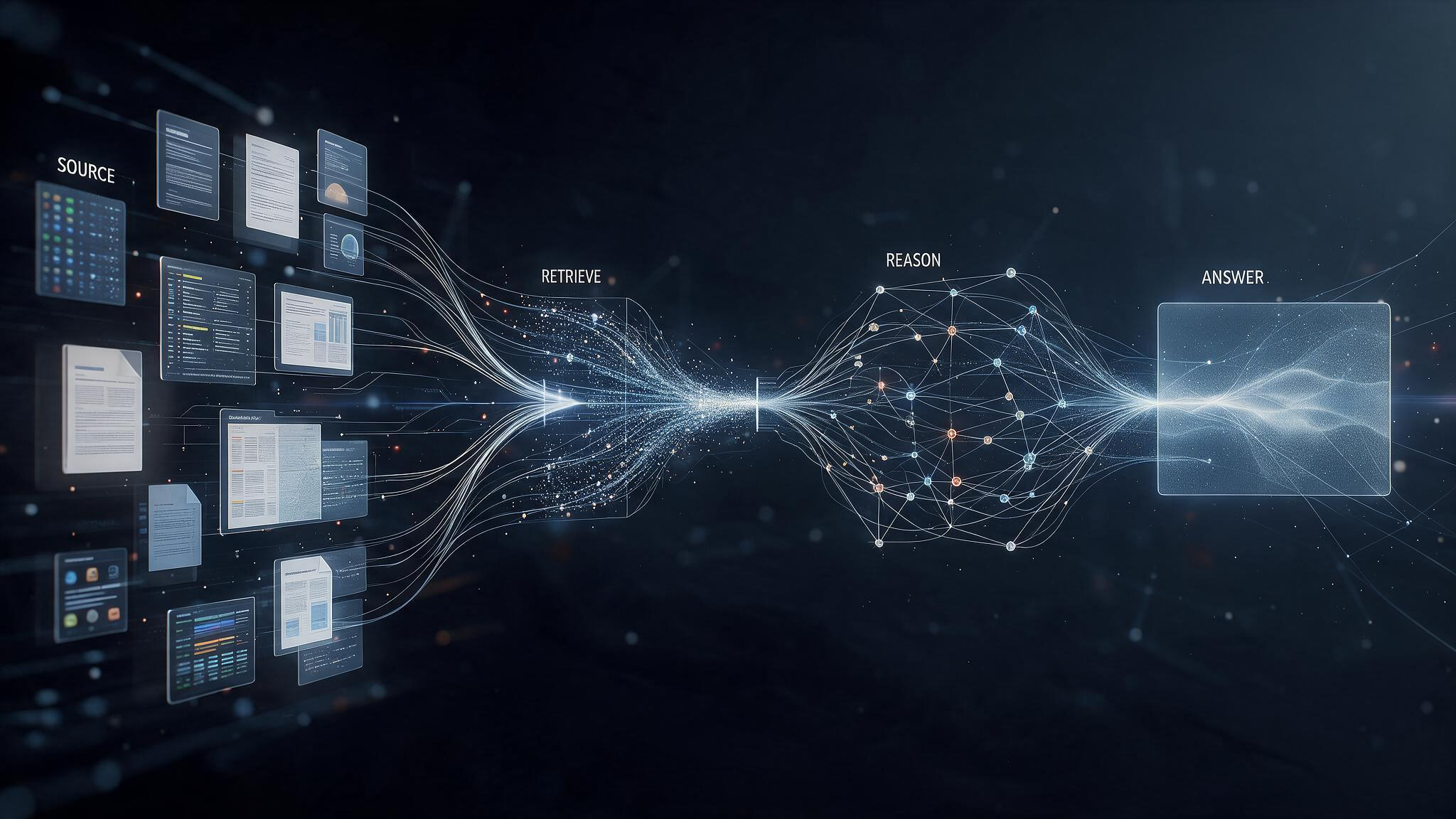
EVERY ANSWER CARRIES ITS SOURCE.
03 — What we build
Six ways generative AI earns its place.
Sources we ground on
Policy, process and procedure libraries
Engineering specifications and drawings
Contracts and commercial documents
Support tickets and case history
Product and service documentation
Intranets, wikis and shared drives
Controls that ship with it
Retrieval-augmented generation
Ingestion, chunking, embedding and hybrid retrieval across your approved sources, with permissions carried from the source system into the answer.
Enterprise copilots and assistants
Assistants scoped to a domain — engineering, policy, product, service — living where the work already happens rather than in another browser tab.
Knowledge intelligence
Structure recovered from unstructured material: entities, relationships, versions and ownership, so retrieval is precise rather than lexical.
Document intelligence
Extraction, classification and comparison across contracts, specifications, reports, drawings and forms — with confidence scores and a review path.
Content generation with review
Drafting inside a template and a tone your organisation has approved, always routed through a person before it leaves the building.
Evaluation and quality control
A question set drawn from real usage, scored for correctness, grounding and citation, re-run on every model or content change.
04 — Demo versus system
Six things that separate the two.
A demo needs a good answer. A system needs to be right, attributable and safe on the answer nobody rehearsed.
01
Permissions
Retrieval respects the entitlements of the person asking — a document they cannot open cannot reach their answer.
02
Citations
Every claim links to the passage it came from, so a user can verify it in one click.
03
Freshness
Content is re-indexed on change, and stale sources are visibly marked rather than silently served.
04
Refusal
The system says it does not know instead of inventing, at a threshold tuned with you.
05
Feedback
Wrong answers are reportable in place, and those reports feed the evaluation set.
06
Measurement
Grounding and correctness are scored continuously, not demonstrated once.
05 — How we get there
Narrow first, then widen.
One domain done properly earns the right to the next. A system that answers everything badly is abandoned before it improves.
Scope
Choose the domain, the sources and the questions that define success.
Ground
Ingestion, permissions, retrieval quality and the evaluation set.
Assist
The interface, the workflow it lives inside, and the review path.
Pilot
A real user group, measured on answer quality and on adoption.
Extend
More sources, more domains, the same controls throughout.
06 — The stack behind it
Sources, retrieval, model, controls, interface.
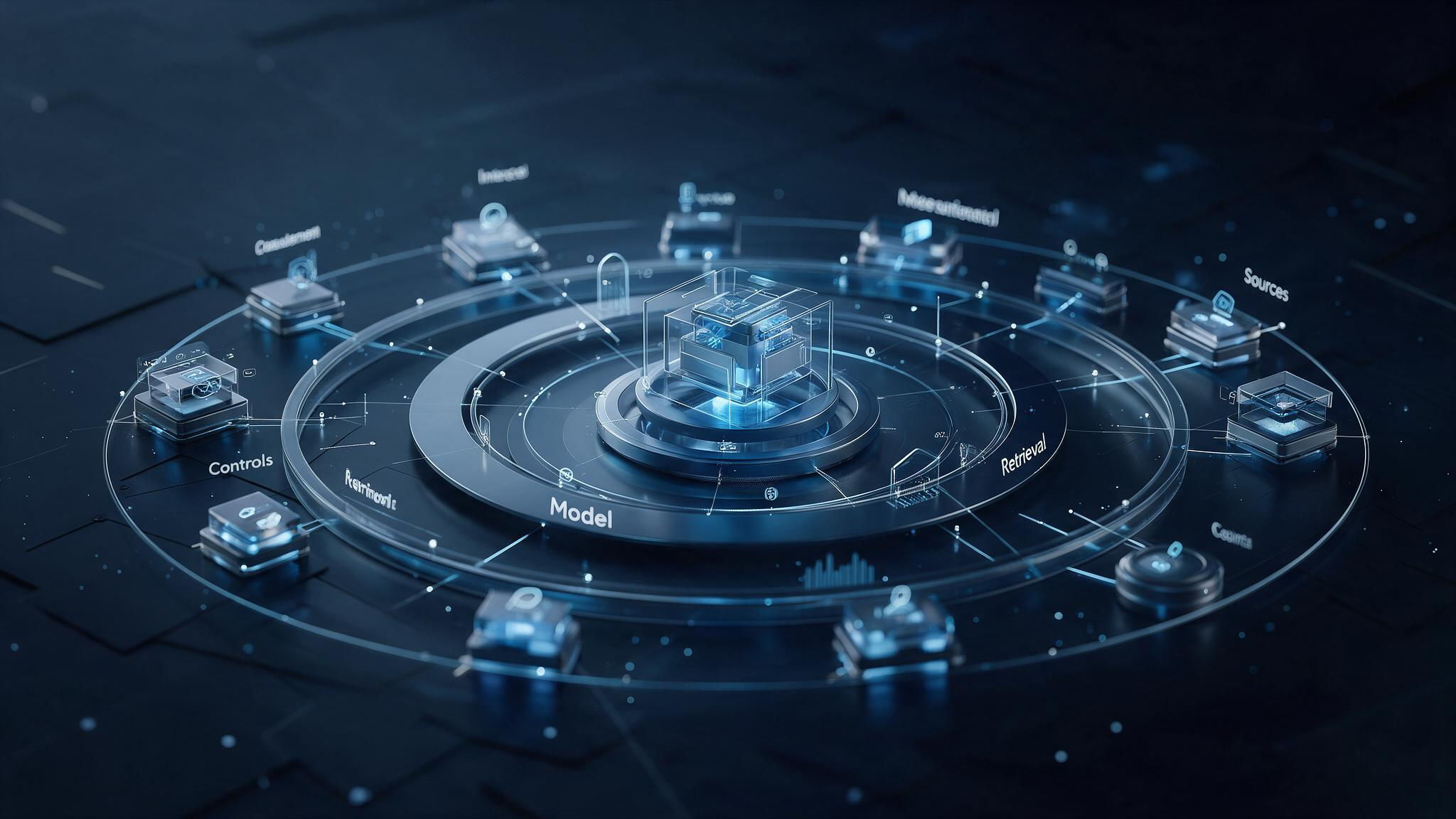
GROUNDED. PERMISSIONED. MEASURED.
07 — Sound familiar?
What people say before they call us.
“Our people cannot find what they need in our own documents.”
Knowledge intelligence
“We tried an assistant and it made things up.”
Grounded RAG
“Answers have to be traceable to an approved source.”
Citation & governance
“The same questions reach our experts every single week.”
Domain copilot
“We read hundreds of contracts to answer one question.”
Document intelligence
“People must only ever see what they are entitled to see.”
Permission-aware retrieval
08 — The rest of the practice
Six more ways we work on AI.
These services are rarely bought one at a time. Most programmes start with one and pull in the others as the work matures.
Advise
AI Strategy & Advisory
Work out which AI opportunities are real, what they are worth and the order to do them in — before anyone builds anything.
Explore
Transform
AI Transformation Services
Rebuild an end-to-end process around AI — the workflow, the systems, the roles and the measures — so the gain is structural.
Explore
Automate
Agentic AI & Automation
Agents that carry multi-step work across your systems under guardrails, evaluation and human approval.
Explore
Build
Enterprise AI Engineering
Custom AI applications, enterprise integration and deployment into the environment your security team already accepts.
Explore
Govern
AI Governance & Responsible AI
The framework, guardrails, evaluation and audit trail that let a risk committee approve an AI system.
Explore
Operate
AI Managed Services
We run what we built — and what others built — with monitoring, evaluation, upkeep, cost management and real support.
Explore
Have a problem worth solving?
Pick one domain and one set of questions.
Tell us where your people lose the most time looking things up. That is usually the shortest route to a system they will keep using.