
Industries
The asset, the work order and the evidence live in three systems.
Energy operations are held together by people moving information between GIS, the maintenance system and a folder of inspection photographs. We close those gaps — and give the field a copilot that already knows the asset history.
Asset performance · Inspections · Field work · Outages · Reporting
01 — Where the time goes
The field already knows. The office finds out later.
That lag is the cost, not the fieldwork.
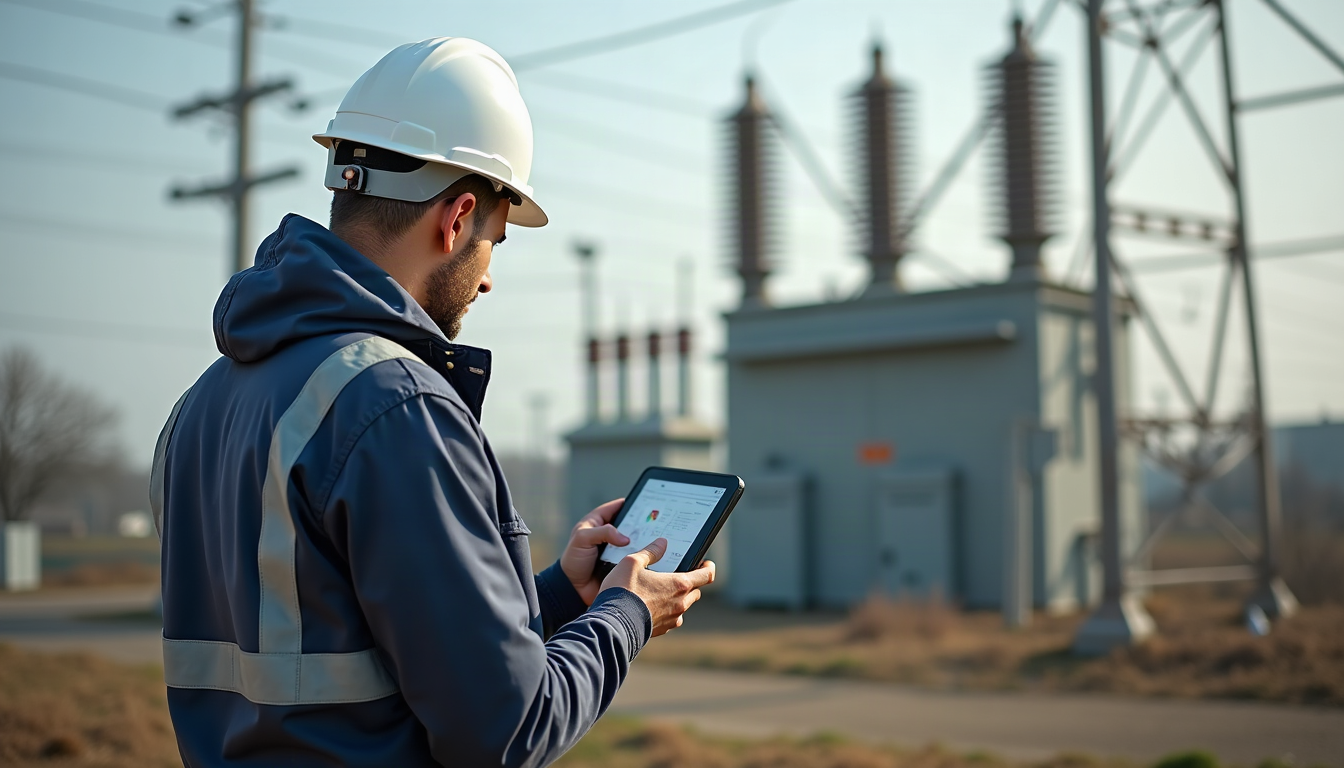
An inspector photographs a defect, writes a note, and the note becomes a PDF that nobody can aggregate. Six months later an asset fails and the evidence that it was going to was on a phone the whole time.
We turn inspection output into structured data at the point it is captured, join it to the asset record, and let the planning system act on it. The same foundation is what lets an agent draft the work order, the outage notice and the regulatory return without anyone retyping the finding.
Dispatch, isolation and anything else with a safety consequence stays with the people accountable for it. Agents prepare, evidence and explain; authorisation does not move.
Talk to Zealogics02 — What you get back
An inspection that ends as data, not as a PDF.

FINDING, ASSET, WORK ORDER AND EVIDENCE — ONE CHAIN.
03 — What the work covers
Where we work in energy and utilities.
Where this shows up
Transmission and distribution network operators
Generation and renewable asset portfolios
Oil, gas and pipeline operations
Water and multi-utility field services
Asset management and reliability functions
Typical stack
Asset performance and diagnostics
Condition monitoring across sensor, SCADA and maintenance history, with failure modes modelled per asset class rather than per site, and findings expressed as the intervention they imply.
Inspection intelligence
Structured capture in the field, image and document extraction from what has already been collected, and defect classification consistent enough to trend across a region.
Field work planning
Work packs assembled from the asset record, crew and parts availability reconciled against the plan, and replanning proposed when the day falls apart — for a planner to accept.
Compliance and regulatory reporting
Returns and performance reporting assembled from source systems with the calculation visible, and exceptions raised while there is still time to correct them.
04 — What ships with it
What an energy engagement leaves behind.
A demonstration is not a deliverable. These are the artefacts an engagement leaves with your team — owned by you, runnable without us, and auditable by whoever has to sign for them.
01
A joined asset record
Asset, location, history and inspection evidence in one place, keyed consistently enough to report on across a region.
02
Structured inspection capture
Findings recorded as data in the field, with the photograph attached rather than the photograph being the record.
03
Condition and failure models
Per asset class, scored against what maintenance found, and delivered as ranked work rather than as a risk score.
04
Work pack automation
The pack a crew needs assembled from the asset record, including the history the last crew wrote down.
05
A field copilot
Asset history, procedures and permits answerable in plain language on the device the technician already carries.
06
Reporting with its arithmetic showing
Regulatory and performance returns generated from source data, with every figure traceable to the records behind it.
05 — Agentic AI, in this sector
Agentic AI in the field.
Where agents start
- —Inspection report drafting
- —Work order creation
- —Asset history summaries
- —Permit document checks
- —Outage notice generation
- —Field query assistant
Where they go next
- —Field work planning crew
- —Asset performance diagnostics
- —Predictive failure detection
- —Crew and parts re-planning
- —Regulatory reporting agents
- —Grid event investigation
Delivery note — Agents plan and prepare; dispatch, isolation and every other safety-critical action remains human-authorised.
06 — In your words
What clients say before they call us.
“Our inspection history is forty thousand PDFs.”
Inspection intelligence
“We plan the day and replan it by nine in the morning.”
Field work planning
“The regulatory return takes three people a fortnight.”
Generated reporting
07 — The rest of the map
Eleven more sectors we work in.
A problem is rarely unique to its industry. Most of what we build here has been built next door as well, which is usually why it arrives faster the second time.
Fab
Semiconductor
Yield investigations, equipment data engineering and the tool intelligence that shortens a root-cause cycle.
Explore
Plant
Manufacturing
Shop-floor copilots, predictive maintenance and the plant reporting that currently happens in a spreadsheet at six in the morning.
Explore
Heavy
Steel
Process optimisation, quality prediction and the reporting heavy industry still assembles by hand.
Explore
TIC
Testing, inspection & certification
Digitised inspection, generated reports and compliance search across standards that change under you.
Explore
Network
Telecom
Network operations assistants, incident response and service assurance analytics that keep up with the alarm volume.
Explore
Finance
Financial services
Reconciliation, close, risk narrative and reporting automation with an approval gate on everything that moves a number.
Explore
Assurance
Audit & assurance
Evidence review copilots, parallel testing agents and document analysis that cites the page it read.
Explore
Clinical
Healthcare
Documentation support, coding assistance and operational insight, with every clinical output approved by a person.
Explore
Public
Government
Citizen services, records intelligence and deployment models that stay inside the boundary the mandate requires.
Explore
Controlled
Defense
Engineering support and controlled AI environments — local models, no external calls, clearance-aware retrieval.
Explore
Talent
Staffing
Engineering, IT and AI talent for Fortune 500 programmes across the USA, UAE, Taiwan and India.
Explore
Have a problem worth solving?
Start where the paperwork is worst.
The inspection-to-work-order chain is usually the fastest thing to fix and the easiest to measure. It is a good first engagement.